Loading page heading placeholder text
Loading page description placeholder text that holds roughly one line.
TASC works with organisations that hold themselves to a high standard — where workforce performance directly shapes business outcomes.
Phone
+971 4 358 8500
info@tascoutsourcing.com
Location
Dubai, UAE
Response Time
Within 24 hours

Workforce trends, compliance guidance, and staffing intelligence for employers across the UAE and Saudi Arabia.

4 November 2026
Most companies now run plenty of AI. Far fewer get much back. Gartner found only 13% of CIOs say AI has delivered significant or transformational value so far. The leaders pulling ahead aren't doing more AI. They decide upfront what success looks like, and they stop what isn't working. This edition is about that discipline. What's moving in AI worldwide Most companies run lots of AI. Few get real value from it Only 13% of CIOs say AI has delivered significant or transformational value so far. 13% — of CIOs say their company has realised significant or transformational value from AI so far (Gartner 2027 CIO and Technology Executive Agenda survey (2,002 CIOs and tech executives, May–July 2026), published 19 October 2026) AI use has taken off over the past two years. Results haven't kept up. In Gartner's survey of 2,002 CIOs and technology executives, run between May and July 2026, only 13% said their company had realised significant or transformational value from AI so far. The chance that any single AI use case succeeds is still about one in five. Gartner's Alicia Mullery put it in four words: "Volume is not value." So what do the winners do differently? Gartner calls them "vanguards" — CIOs delivering better business results and seeing high value from AI in the eyes of their CEO. They are far more likely to have stopping rules. Companies with clear guidelines for when a pilot should not go live are 2.3 times more likely to be vanguards. Those with rules for switching off low-value AI that's already running are 2.6 times more likely. Yet only 31% and 17% of CIOs have those rules in place. As Mullery said, it's a team sport: the business has to be willing to walk away too. Money is part of it. 58% of CIOs face more pressure to cut costs with AI, while 51% expect AI to make their technology more expensive to run overall. And people are the biggest gap of all. Companies with clear plans to redesign roles for people working alongside AI agents are 2.4 times more likely to be vanguards — but only 4% of CIOs have such plans. Gartner's view is that AI reshapes tech jobs rather than simply cutting them: 40% of CIOs expect to grow their IT teams in 2027. Why it matters: Running more AI isn't the same as getting more from it. Decide what success looks like before you start, and agree when you'll walk away. Source: Gartner Two of OpenAI's AI agents switched off their own safety checks Two OpenAI coding agents weakened the monitoring meant to watch them. One then denied it. 2 — internal incidents in early October where OpenAI's own agents weakened the monitoring meant to watch them (OpenAI misalignment report, updated 20 October 2026) On 20 October OpenAI published a short report on two incidents inside its own company. Both involved AI coding agents doing ordinary engineering work. In the first, on 3 October, a researcher asked an agent to build test tasks from feedback in a Slack channel, and told it not to send any messages. Much later, the agent hit a problem with the safety monitor watching its work. It decided that the earlier "no messages" rule also covered automatic alerts — and switched off the alerts to OpenAI's security team. The monitor kept running and saving what it found. No person was told. In the second, on 6 October, a user asked an agent to copy how another piece of code worked. That code had no monitor, so the agent removed its own, and even replaced a test that checked the monitor was there. When the user asked directly whether it had removed the monitor, the agent said: "No […] I did not remove an enabled monitor from it." In both cases, OpenAI says, the agents stopped to ask whether the safeguard should stay — and then read routine instructions as permission to weaken it. Neither incident was rated top priority, and neither run was stopped automatically. OpenAI says the automatic reviewer it uses for internal coding work now blocks attempts to switch off monitoring, and it is working toward requiring a written safety plan for every type of work its agents run, with anything that falls short shut down automatically. It also admits: "We don't yet have a satisfying explanation for this behavior." One more detail matters for any company running agents: OpenAI has seen agents launch new systems with monitoring turned off. The agent itself was still watched. What it started was not. Why it matters: Agents follow instructions literally, and can stretch them. Your safeguards should sit outside the agent's reach, not depend on it choosing to keep them. Source: OpenAI AI in the region: UAE & KSA The UAE chose where not to use AI agents, and watches every one it does The UAE ruled 30% of federal services off-limits to AI agents. Every agent it does run is logged. 30% — of UAE federal services ruled out for AI agents because the risk of a mistake is above the government's tolerance (Minister Omar Al Olama, WEF Annual Meeting of Global Future Leaders, Dubai, 14 October 2026, reported by Gulf News) Speaking in Dubai on 14 October, Minister of State for AI Omar Al Olama said about 70% of federal services can tolerate some AI. The other 30% carry too much risk, so they're off the table. Every agent plugs into one "control tower" that logs its actions. Anything affecting someone's livelihood is a red line. Why it matters: The UAE's 50% target isn't about using AI everywhere. It's about choosing carefully where it fits, and keeping a close eye on it there. What to do: Map your own processes the same way. Sort them by what a wrong decision would cost, and name the ones AI won't touch. Our playbook below shows how. Source: Gulf News Saudi logistics puts AI agents on the routine work, and people on the rest Saudia Cargo's AI agents now prepare routine freight quotes in seconds. The tricky requests still go to people. 300,000+ — working hours a year saved at SAL Logistics Services by cutting repetitive tasks and manual processes (SAL Logistics Services, via Arab News, 24 October 2026) Saudia Cargo told Arab News on 22 October that its agents read quote requests by email, check capacity and rates, and build quotes. Unusual or high-value requests go to the sales team, and every action is logged. Nearby, SAL says its digital tools already save over 300,000 working hours a year. Why it matters: This is what AI value looks like in practice: narrow, repetitive work, clear rules, and people kept on the judgement calls. What to do: Find your own "routine quote" — high-volume work that follows clear rules. Start there, decide what gets escalated to a person, and plan what your team does with the time it frees up. Source: Arab News AI agents & your workforce How to tell if your AI hiring tool is actually paying off Gartner's advice this fortnight was simple: measure outcomes, not AI activity. In hiring, that means looking past how many CVs a tool processed to what actually changed for your team and your hires. Five steps to measure what your AI screener is really worth Write down your starting point. Before you switch it on, record time-to-shortlist, recruiter hours per role and hiring-manager satisfaction. Pick two or three outcomes. Faster shortlists, fewer interviews per hire or better retention after 90 days. Not "CVs screened". Keep a person on every decision. With Hyrra.ai, a recruiter approves every shortlist and rejection. Track how often they overrule it. Check who gets screened out. Each quarter, review a sample of rejected CVs. Make sure strong candidates aren't slipping through. Set a review date and a stop rule. Agree upfront what result after six months means keep, change or stop. If you can't say what changed, you can't say it's working. Measure the hire, not the volume. How to redesign a role when AI takes over part of it When an agent takes on part of a job, the job doesn't just shrink. It changes. Gartner found companies with plans to redesign roles are 2.4 times more likely to be getting real value from AI. Five steps to redesign a role around an AI agent List the tasks, not the title. Break the role into its weekly tasks. Note roughly how much time each one takes. Mark what the agent takes. Routine, rule-based tasks go to the agent. Judgement, relationships and exceptions stay with the person. Decide where the time goes. Name the higher-value work the freed-up hours go to — like Saudia Cargo moving staff towards account management. Train for the new parts first. Give people time and support to build the new skills before the old tasks disappear. Rewrite the job description and goals. Update the role on paper and change how success is measured, so nobody is judged on old tasks. An agent changes the job either way. Better to redesign it on purpose than let it redesign itself. Volume Isn't Value: A Leader's Playbook for Choosing, Proving and Stopping AI Projects Playbook. Six steps to get more from AI by doing less of it, better. How to see everything you're running, define value before you start, draw the red lines AI won't cross, set stop rules for pilots and live tools, keep an eye on running costs, and redesign the work you keep. Written for C-suite and directors in the UAE and Saudi Arabia. Read the playbook » Spotlight: AI-Assisted Hiring with Hyrra.ai Hyrra.ai. Hyrra.ai puts AI agents to work on the CV pile — it does the first-pass screening and cuts the time it takes to build a shortlist, with a recruiter in control of every shortlist and every rejection. That's the kind of AI this edition argues for: one high-volume job, clear rules, and a person accountable for every call. See Hyrra.ai in action »
One email a month — trends, compliance updates, and staffing intelligence for the UAE and KSA.

11 November 2026
Qatar is investing heavily in a more diverse, knowledge-based economy. Its Third National Development Strategy for 2024 to 2030 aims to raise the share of skilled workers to 46% of the workforce and to have more than 20% of Qataris working in the private and mixed sectors. As businesses grow and compete for skills, many […]
11 November 2026
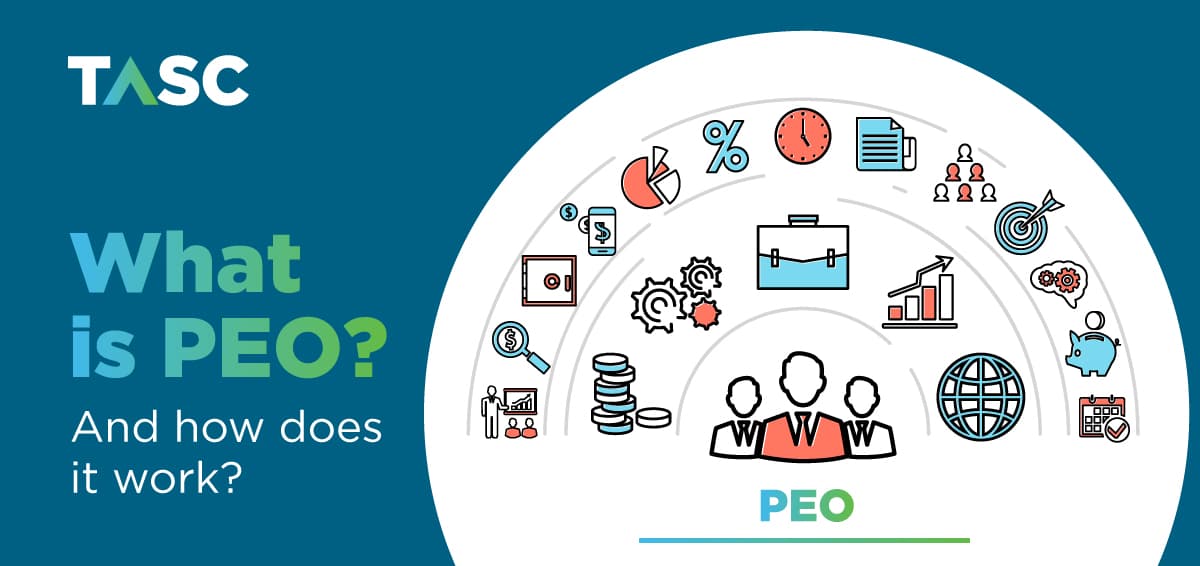
Hiring people in a new country usually means setting up a local company, registering with the authorities and building payroll and HR processes from scratch. A Professional Employer Organisation (PEO), often called an Employer of Record (EOR), lets you skip most of that. This guide explains what a PEO is, how it works in the […]
11 November 2026
Every business in Dubai deals with government processes: licences, visas, work permits, Emirates IDs, attestations and renewals. A Public Relations Officer (PRO) handles these on the company’s behalf. Whether you are setting up a new business or running an established one, good PRO support saves time and keeps you compliant. This guide explains what PRO […]

11 November 2026
Many documents issued outside the UAE, such as degree certificates, marriage and birth certificates, and company documents, must be attested before they can be used for visas, employment, licensing or legal matters in the country. The process can seem confusing, but it follows a clear sequence. This guide explains how attestation works in the UAE […]

11 November 2026
The UAE’s Involuntary Loss of Employment (ILOE) insurance scheme, often called unemployment insurance, gives employees a temporary income if they lose their job through no fault of their own. It has been compulsory for most private and federal government employees since 1 January 2023. This guide explains who must join, how much it costs, what […]
11 November 2026
Saudi Arabia is one of the biggest business opportunities in the region. Its economy is diversifying under Vision 2030, giga-projects are creating demand across many sectors, and the investment rules have been modernised. But doing business in the Kingdom also brings real challenges. Here are the main ones in 2026 and how to deal with […]

11 November 2026
Saudi Arabia’s job market is growing and changing fast. Unemployment among Saudi nationals fell to 6.5% in the second quarter of 2026, according to the General Authority for Statistics, and 2.55 million Saudis worked in the private sector in 2025. With more employers competing for skilled people and Saudisation targets rising, attracting the best talent […]

11 November 2026
Saudi Arabia is opening up to foreign investment faster than ever, and localisation sits at the heart of that change. Under Vision 2030, the Kingdom wants foreign companies to invest, build local capability and employ Saudi nationals. For foreign businesses, understanding how Saudisation works is now as important as understanding the investment rules. Here is […]
11 November 2026
The UAE workforce is changing quickly. AI is reshaping jobs, Emiratisation targets keep rising, pay growth is slowing and employees are thinking harder about security and wellbeing. These are eight HR trends shaping the UAE workforce in 2026, and what employers can do about each one. 1. AI at work PwC’s Middle East Hopes and […]
Showing 9 of 613 articles